

Healing Trauma Through Art Therapy
A Gentle Path to Recovery
Trauma is one of those life experiences that leaves a mark not just on your mind, but on your whole being. It can feel like carrying an invisible weight that never quite goes away. While the road to recovery can be long and challenging, art therapy offers a truly unique way to heal—a way that feels personal and deeply meaningful. Unlike talk therapy, which often relies on words, art therapy taps into creativity, helping you express what’s inside without needing to explain it all.
Using colours, shapes, and textures, art therapy lets you channel emotions that might feel too overwhelming or hard to put into words. It’s not about creating a perfect piece of art—it’s about letting yourself express what you’re feeling in a way that feels safe and freeing. Plus, engaging in creative activities helps activate the part of your brain that handles decision-making and emotional regulation, while calming your nervous system and creating a sense of peace.
In this way, art therapy becomes more than just a way to cope—it’s a tool that empowers you to work through your trauma at your own pace. It helps turn those big, messy feelings into something tangible, something you can look at and understand. For many, this process brings moments of clarity and self-discovery, opening a path to healing that’s not only effective but also incredibly supportive and empowering.
In this blog, we’ll explore the profound benefits of art therapy for trauma healing, uncover the science behind trauma’s impact on the human body, and delve into how one woman, Cari, took her first courageous steps towards healing through art therapy.
What Is Art Therapy?
At its core, art therapy uses creative expression as a tool to explore emotions, process life experiences, and uncover deeper layers of the self. You don’t need to be an artist to benefit—art therapy isn’t about creating “perfect” work; it’s about expressing what’s inside. Through activities like drawing, painting, and sculpting, individuals can process difficult feelings in a safe, supportive, and empowering way.
Research shows that engaging in creative expression activates the prefrontal cortex—the part of the brain associated with decision-making, self-regulation, and emotional processing. Art therapy also engages the parasympathetic nervous system, often referred to as the “rest and digest” system, helping to calm the mind and body.
Understanding Trauma and Its Effects
Trauma isn’t limited to catastrophic events like natural disasters or violence—it can also stem from chronic stress, loss, or any event that overwhelms the individual’s ability to cope. When trauma occurs, it disrupts the body's natural equilibrium, leaving a lasting impact on the brain and nervous system.
Trauma’s Biological Impact:
Brain Function:
Trauma primarily impacts the limbic system, the brain's emotional centre. The amygdala, responsible for detecting threats, becomes hyperactive, keeping the body in a heightened state of vigilance. Meanwhile, the prefrontal cortex, which helps regulate emotions and decision-making, often becomes underactive.
Nervous System Dysregulation:
Trauma keeps the nervous system stuck in a loop of hyperarousal (fight-or-flight) or hypoarousal (freeze). This leaves individuals feeling overwhelmed, disconnected, or perpetually on edge.
Stored Memories:
Unlike verbal memories, traumatic experiences are often stored as non-verbal, sensory memories in the body. This is why trauma can manifest as physical sensations or triggers that seem to come out of nowhere.
How Art Therapy Helps Heal Trauma
Art therapy provides a bridge to process trauma stored deep within the body and mind. Because it is non-verbal, it allows individuals to bypass the need to explain or recount traumatic events, which can often feel re-traumatising. Instead, it engages the subconscious, tapping into visual and sensory elements to safely explore emotions.
Through the process of creating, individuals can externalise their pain, examine it from a safe distance, and begin to make sense of their experiences. Art therapy also strengthens the connection between the body and mind, encouraging emotional regulation, grounding, and self-awareness.
The Power of Therapeutic Journaling
Art therapy pairs beautifully with therapeutic journaling. Writing allows us to explore the stories behind our emotions, deepening our self-awareness and helping us connect the dots between past experiences and present feelings. Journaling alongside art therapy amplifies the healing process by offering a structured way to reflect on the emotions unearthed during creative expression.
For instance, after creating a drawing that symbolises stress or overwhelm, you can journal about what the colours or shapes represent. What memories do they bring up? How do they connect to your current life situation? This combination of visual and written exploration creates a holistic healing experience, bridging the gap between emotion and understanding.
If you’re ready to dive into journaling's transformative practice, check out my Therapeutic Journaling eBook, where you’ll find guided prompts to pair with your art therapy sessions. It’s a beautiful tool to bridge the gap between creative expression and mindful reflection, helping you process emotions on a deeper level and truly connect with your inner self.

To help illustrate how art therapy can facilitate transformation, let me introduce you to Cari—a fictional character who could represent any one of us during a challenging time.
Cari’s Journey
Finding Light Through Art Therapy
Cari’s life had become a shadow of what it once was. A naturally social person, she now spent most of her time at home, isolating herself. She had no idea why she felt this way. But after experiencing her first panic attack at her friend’s birthday party—one so intense it left her breathless, shaking, and convinced she was going to pass out—she found herself consumed by social anxiety.
Her friend, noticing Cari’s struggle, gifted her a therapeutic art workbook. At first, Cari was sceptical. “How could drawing help?” she thought. But one lonely evening, desperate for relief, she decided to give it a try.
Cari’s First Art Therapy Session
The workbook instructed Cari to draw a feeling, so she decided to draw what her panic attack felt like. She hesitated, worried she’d “do it wrong,” or make her feel panicked again, but she trusted in the process and soon found herself reaching for colours and shapes that reflected her inner turmoil.
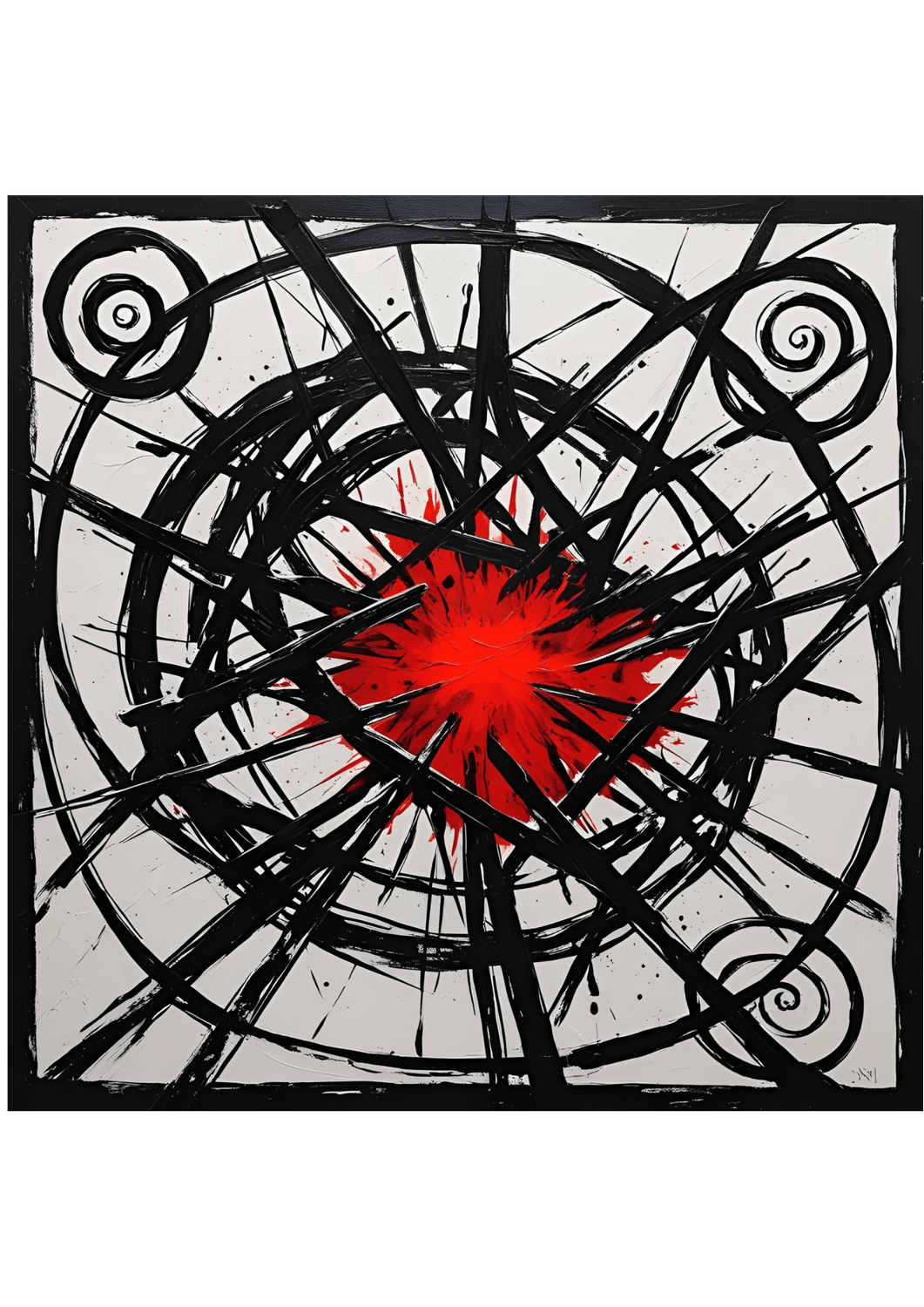
On her page, she used black jagged lines that crisscrossed chaotically, representing the suffocating pressure and confusion of her panic. A burst of red in the centre symbolised the overwhelming fear and heat she felt in her chest. Around the edges of the page, she added dark, spiralling shapes to depict the way her thoughts spiralled out of control during the attack.
By the time she finished, Cari sat back and took a deep breath. Tears streamed down her face, but they weren’t tears of fear—they were tears of release. For the first time since the attack, she felt lighter and calmer.
Breaking Down Cari’s Drawing
1. Colours:
Black: Represented the chaos and pressure she felt during her panic attack. Black often symbolises fear, overwhelm, or the unknown.
Red: Signifies intense emotions like fear and panic. Red is often linked to heightened sensations, whether anger, anxiety, or urgency.
Dark Spirals: The deep tones reflected her thought patterns—unending loops of worry and dread.
2. Shapes:
Jagged Lines: The erratic, uncontrolled nature of the lines mirrored the uncontrollable sensations Cari experienced during her panic attack.
Spirals: The spirals depicted the cyclical nature of her anxious thoughts, as if they had no beginning or end.
3. Placement:
Central Red Burst: The placement of red at the centre of the page suggested that her fear was at the core of her experience, radiating outward to affect every aspect of her body and mind.
Perimeter Spirals: The spirals around the edges might represent how her anxiety feels ever-present, surrounding her life.
Journaling Reflection
After completing her drawing, Cari turned to the journaling prompts provided in her workbook:
What do the colours and shapes in my drawing represent to me?
How does my body feel now compared to before the exercise?
What emotions came up for me during this activity?
As Cari journaled, she made a powerful connection. The fear she felt at her friend’s party reminded her of a similar fear she had experienced as a child when her parents had a heated argument at a family gathering. The memory, buried deep in her subconscious, had been triggered by the party’s loud, chaotic atmosphere, tipping her nervous system into hyperarousal. As she sat with the feeling, she recalled her childhood and how her parents' often explosive arguing caused the same hyperarousal and fear in her body.
This insight gave Cari a starting point for her healing journey. While she had more work to do, she felt empowered by the understanding that her anxiety wasn’t random—it had roots.
You may like to read this blog post...
Techniques for Managing Your Emotional Well-Being:
Click to explore some amazing products and programs
to take you to the next level.
Destroy Depression Program
Disclaimer - This blog post contains affiliate links
Why Art Therapy Works
Cari’s experience highlights the transformative power of art therapy. By externalising her emotions through art, she was able to:
Identify and process feelings she hadn’t fully understood.
Release pent-up emotions safely and non-verbally.
Begin to connect the dots between her present challenges and past experiences.
Through art therapy, Cari not only found relief but also took the first steps towards healing her trauma.
Art Therapy: A Path to Your Healing
Whether you’re navigating anxiety, trauma, or simply seeking greater self-awareness, art therapy offers a gentle, accessible way to reconnect with yourself. It doesn’t require artistic skill or perfection—just a willingness to explore and express.
If you’re ready to begin your healing journey, consider trying my therapeutic art workbook, From Heart to Canvas, or joining a local art therapy workshop. Creativity is a powerful tool, and through it, you can unlock healing and transformation, one brushstroke or pencil line at a time.
Art therapy is more than just a creative outlet—it’s a way to listen to the whispers of your soul and honour your journey. Will you take the first step?
Discover More with ‘From Heart to Canvas’
If you’re ready to dive deeper into the transformative power of art therapy, my workbook, From Heart to Canvas, is here to guide you.
Packed with structured activities, step-by-step instructions, inspiring prompts, and deep self-reflection tools, From Heart to Canvas empowers you to express yourself freely while uncovering insights into your inner world. Plus, with a comprehensive self-interpretation glossary, you’ll navigate your artistic journey with confidence.
Art therapy is a journey—a gentle yet powerful process of self-discovery and healing. Whether you’re facing emotional challenges or simply seeking to deepen your self-awareness, it offers a safe and nurturing path forward. Let your creativity lead the way.
Subscribe through the workbook's page and get your FREE Art Therapy Activity 🎨✨
Pair it with my Therapeutic Journaling eBook to gain even deeper insights and uncover the hidden layers of your emotional world.
(It is available at a discounted rate if purchased together through the art therapy workbook checkout.)

More Starlah Rose blog posts to explore:
Final Thoughts
Art therapy is more than a tool—it is a profound modality of healing that nurtures resilience and self-compassion. It reminds us that healing often starts from within, and the creative journey can serve as a bridge to reconnect with ourselves and move beyond the challenges of trauma.
Art therapy is a great way to release those bottled-up feelings without having to say a word. It’s surprising how much of your past can explain your present, and through art, it all starts to make sense. That’s what happened for Cari—art therapy didn’t just help her let go but also helped her start working through her trauma step by step.
Art therapy is a safe and creative way to work through the tough stuff. It helps you dive into those deep emotions and memories without feeling overwhelmed. Plus, it’s pretty grounding—it even calms your nervous system, helping you feel more relaxed and ready to face things head-on.
The best part? It’s all about creating—colours, textures, symbols—whatever works for you. And in the process, it helps you make sense of your inner world and heal in a way that feels empowering.
Happy Healing with Creativity. Your new self awaits. 🎨
Starlah Rose


SUBSCRIBE
Now to Receive a Free
"How to Be Mindful in 7 Days" Workbook.
By signing up you also agree to recieve my newsletter when I have interesting stories and blogs to share- straight to your inbox before everyone else
You’re almost there. Just pop in your details on the next page and your How to Be Mindful in 7 Days workbook will be on its way to you.
🔐 Copyright Notice
This eBook and accompanying workbook are intended solely for individual use. Reproduction, distribution, or sharing of any content—whether in part or in full—is strictly prohibited without prior written permission from the author.
This website contains cookies. We're committed to your privacy. We use the information you provide to us to contact you about our relevant content, products, and services. You may unsubscribe from these communications at any time.
🔐 Copyright Notice
This eBook and accompanying workbook are intended solely for individual use. Reproduction, distribution, or sharing of any content—whether in part or in full—is strictly prohibited without prior written permission from the author.